


Technical specialist training
Engineers, operators, mechanics, electricians and instrumentation specialists

Technical programmes
 Geology, Petrophysics and Reservoir Engineering
 Drilling and wells services
 Oil and gas production
 Refining and Chemicals
 Maintenance management
 Capital construction
 Gas processing
 Power and electrical engineering
 Automation, instrumentation and controls
 Mechanical Engineering and Pipeline Systems
 Offshore
 Specialized Equipment
Core business skills
 International Oil and Gas Business
 Finance and cost control
 Procurement and supply chain management
 HRM and training
 Leadership and management
 Project and risk management
 Professional administration
 Sales and marketing
 Core business skills
 Industrial psychology
 Legal support
 English language training
Digital skills
Health, safety and environment
Science, technology and mathematics
Practical solutions, project experience and insights for professionals.
 Article
A quick test for operations and maintenance engineers. The AI answer looks right, but one of its mistakes is off by a factor of ten. The breakdown, a prompt template and a checklist you can use at work.
 Elena Sevriukova
 Article
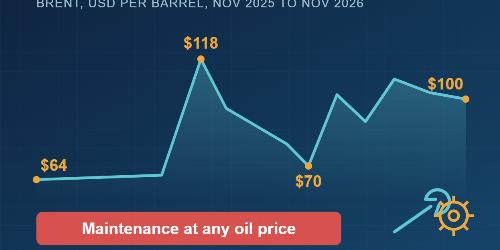
Budget cuts in January, production at any cost in March. How to avoid both mistakes and find the savings that don't add risk.
Elena Sevriukova Article
Casing cementing is one of the most critical stages in the development of an oil or gas well. It involves filling the annular space between the casing and the wellbore wall with a specialized cement slurry. Once hardened, this slurry provides the strength and integrity necessary to secure the casing in place.
 Elena Gakhova
 Article
A carbonate reservoir is a type of hydrocarbon-bearing formation composed primarily of rock fragments derived from marine organisms—from plankton to corals. Unlike more uniform clastic or clay-rich formations, carbonate reservoirs present more complex and heterogeneous structures, posing unique challenges for the oil and gas industry.
Elena Gakhova Article
In enterprises that handle a variety of goods and materials, warehouse operations represent a critical component of the supply chain and a substantial portion of expenses. This applies equally to production, transit, reserve, wholesale distribution, and retail storage facilities. As companies seek to optimize costs and increase efficiency across their logistics chain, the potential introduction of a Warehouse Management System (WMS)—a comprehensive software-hardware solution—often comes under co
Elena Gakhova Article
In today’s dynamic and competitive oil and gas industry, leadership is about much more than just setting objectives. To foster business growth, leaders must motivate, guide, and inspire employees at every level. Yet, in many companies, managers tend to view team challenges through a broad, uniform lens—often overlooking the unique attributes of each leader and team member. The situational leadership model, developed by Kenneth Blanchard and Paul Hersey in 1969, was groundbreaking because it enco
Elena Gakhova Article
In many organizations, industrial safety and occupational health are often associated with a safety officer wearing a hard hat, delivering lengthy and tedious lectures full of dry regulations. From the barrage of information, employees often remember only three words—“no,” “dangerous,” and “prohibited.” After the briefing and signing off in a few logbooks, they may return to their tasks, discarding the formal rules and best practices as soon as they leave the training room.
Elena Gakhova Article
Innovation management is a strategic process that guides an organization from the initial spark of an idea to its successful implementation. Effective innovation management reduces the likelihood of leadership missteps, fosters an environment where employees can excel, and ultimately strengthens the company’s competitive position.
Elena Gakhova Article
Cloud computing provides on-demand access to a wide range of computing services—servers, databases, analytics, storage, and intelligent analysis—via the internet.
Elena Gakhova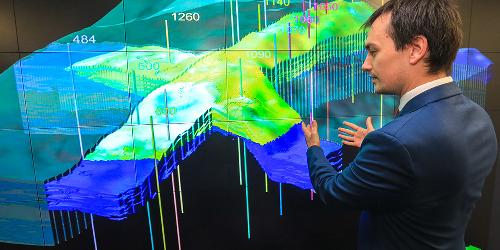 Article
Modern oil-producing companies worldwide are rapidly adopting digital technologies, including robotic process automation, the use of drones, and 3D visualization. These advancements help identify potential issues at production sites and along pipelines with greater precision. At the core of the "Digital Oil Field" concept lies artificial intelligence, along with virtual and augmented reality technologies. Together, these tools provide highly accurate simulations of various operational scenarios,
Elena Gakhova Article
Major overhauls of large technological units and equipment at production enterprises are critical undertakings that require comprehensive control, work stoppages, and planned temporary power outages. While some may view this as a routine matter, in reality, without diligent oversight and clear management, there is a significant risk of unplanned expenses, disruptions, delays, and other unforeseen situations.
Elena Gakhova Article
Ventilation and air conditioning (HVAC) systems are critical components in the oil and gas industry, ensuring safe and comfortable working environments in facilities such as offshore platforms, refineries, processing plants, offices, and control rooms. The effectiveness of these systems directly impacts indoor air quality, operational efficiency, and the health and safety of personnel.
Elena Gakhova Article
Increasing oil production significantly depends on the development of heterogeneous, low-permeability reservoirs and enhancing the recovery of hard-to-extract reserves from mature fields. Acid and hydraulic fracturing are key techniques employed to achieve these objectives.
Elena Gakhova Article
In the modern oil and gas industry, enhancing operational efficiency and competitiveness requires the adoption of advanced methods for processing and analyzing information. The complexity of processes and the continuous updating of knowledge and skills enable enterprises to achieve maximum results across all areas, including effective contract management and administration through digital technologies.
Elena GakhovaShowing 1–12 of 27 publications
Could not load publications. Please try again.
Tell us about your projects, methods and results.

 Grid
 List


