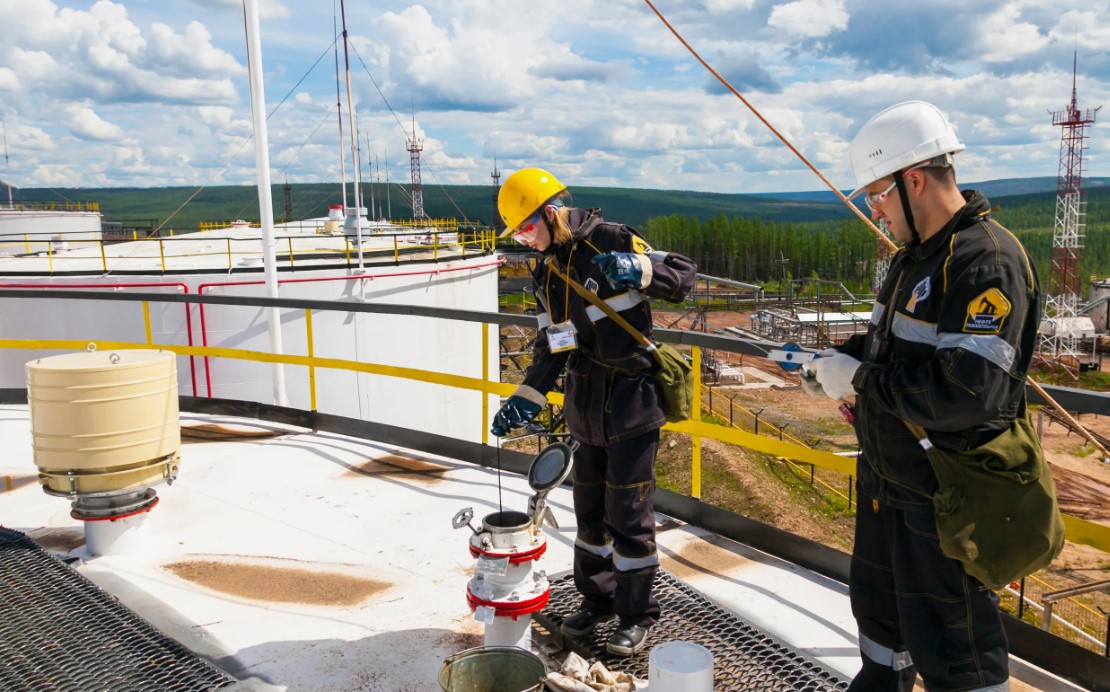
Technical specialist training
Engineers, operators, mechanics, electricians and instrumentation specialists


Technical programmes
 Geology, Petrophysics and Reservoir Engineering
 Drilling and wells services
 Oil and gas production
 Refining and Chemicals
 Maintenance management
 Capital construction
 Gas processing
 Power and electrical engineering
 Automation, instrumentation and controls
 Mechanical Engineering and Pipeline Systems
 Offshore
 Specialized Equipment
Core business skills
 International Oil and Gas Business
 Finance and cost control
 Procurement and supply chain management
 HRM and training
 Leadership and management
 Project and risk management
 Professional administration
 Sales and marketing
 Core business skills
 Industrial psychology
 Legal support
 English language training
Digital skills
Health, safety and environment
Science, technology and mathematics
Engineers, operators, mechanics, electricians and instrumentation specialists
Preparing personnel for facility start-up
Staged training with practice and assessment
Role profiles, assessment and development plans
Learning portal, online courses and simulators
Managers, project teams and support functions

 2613


The on-scene commander plays a pivotal role during emergencies, acting as the primary decision-maker at the incident scene. Such individuals require a comprehensive understanding of the various components involved in emergency response. This training curriculum seeks to hone the skills necessary to effectively manage an emergency situation from an on-the-ground perspective.
The purpose of this training is to equip potential on-scene commanders with the knowledge and expertise necessary to manage, lead, and coordinate emergency responses efficiently and effectively.
Participants will undergo rigorous training to develop the following core competencies:
• Organisation of Emergency Response: Understanding the hierarchical and structural approach to managing emergencies, including the coordination and deployment of resources.
• Role of the On-Scene Commander: Grasping the significance of this role, its responsibilities, and its connection to the broader emergency response system.
A minimum of 15 hours of practical exercises.
• One course day is eight hours with a minimum of six hours of effective training
• One hour is 60 minutes
During practical exercises, the challenges and degree of difficulty must be increased in line with the rising level of mastery.
During practical exercises, the instructor will observe the participants and give immediate feedback, and time must be allotted for feedback and guidance after the exercise is over. The course concludes with half-a-day’s training with the full group.













Training can take place in 4 formats:
Description of training formats:
When forming groups of students, special attention is paid to important criteria - the same level of knowledge and interests among all students of the course, in order to maintain stable group dynamics during training.
Group dynamics is the development of a group in time, which is caused by the interaction of participants with each other and external influence on the group. In other words, these are the stages that the training group goes through in the process of communicating with the coach and among themselves.
The optimal group size for different types of training:
Feedback in the form of assessments and recommendations is given to students during the course of training with the participation of an instructor and is saved in the course card and student profile.
In order to control the quality of the services provided, students can evaluate the quality and training programme. Forms of assessment of the quality of training differ for courses with the participation of an instructor and those that are held in a self-paced format.
For courses with an instructor, start and end dates are indicated. At the same time, it is important to pay attention to the deadlines for passing tests, exams and practical tasks. If the specified deadlines are missed, the student may not be allowed to complete the entire course programme.
A personal account is a space for storing your training preferences, test and exam results, grades on completed training, as well as your individual plan for professional and personal development.
Users of the personal account have access to articles and blogs in specialized areas, as well as the ability to rate the completed training and leave comments under the articles and blogs of our instructors and technical authors
Registered users of a personal account can have various roles, including the role of a student, instructor or content developer. However, for all roles, except for the student role, you will need to go through an additional verification procedure to confirm your qualifications.
Based on the results of training, students are issued a certificate of training. All training certificates fall into three main categories:
You can always download a copy of your training certificate in PDF format in your personal account.
You will still have access to the course after completing it, provided that your account is active and not compromised and Tecedu is still licensed for the course. So if you want to review specific content in the course after completing it, or do it all over again, you can easily do so. In rare cases, instructors may remove their courses from the Tecedu marketplace, or we may need to remove a course from the platform for legal reasons.
During the training, you may encounter various forms of testing and knowledge testing. The most common assessment methods are:
Travel to the place of full-time training is not included in the cost of training. Accommodation during full-time studies can be included in the full board tuition fees.
While Tecedu is not an accredited institution, we offer skills-based courses taught by real experts in their field, and every approved, paid course features a certificate of completion or attendance to document your accomplishment.
You can preview samples of the training materials and review key information about the course on our website. You can also review feedback and recommendations from students who already completed this course.
We want you to be happy, so almost all purchased courses can be returned within 30 days. If you are not satisfied with the course, you can request a refund, provided the request complies with our return policy.
The 30-day money back policy allows students to receive quality teaching services with minimal risk, we must also protect our teachers from fraud and provide them with a reasonable payment schedule. Payments are sent to instructors after 30 days, so we will not process refund requests received after the refund period.
We reserve the right, in our sole discretion, to limit or deny refund requests in cases where we believe there is refund abuse, including but not limited to the following:
We accept most international credit and debit cards like Visa, MasterCard, American Express, JCB and Discover. Bank Transfers also may be an option.
Conducting classes is based on the fact that the teacher demonstrates text, drawings, graphics, presentations on an interactive board, while the content appears in the student's electronic notebook. A specially designed digital notepad and pen are used to create and edit text and images that can be redirected to any surface via a projector.
Classes are live streamed online, automatically recorded and published on the Learning Portal, allowing you to save them for reuse anytime, anywhere, on any mobile device. This makes it possible not to miss classes and keep up with classes and keep up with the passage of new material.
Real-life training uses the principles of game organization, which allows future professionals to rehearse and hone their skills in a virtual emergency. Learning as a game provides an opportunity to establish a connection between the learning activity and real life.
The technology provides the following learning opportunities:
Basic principles of training:
The main advantages of Game Based Learning technology:
Conducting practical classes online using remote access technologies for presentations, multimedia solutions and virtual reality:

 Intermediate level
 3 days · In person / Online


Intermediate level
In person / Online

Foundation level
In person / Online

Intermediate level
In person / Online

 Advanced level
In person / Online

Intermediate level
In person / Online

 CASE STUDY
How role-play exercises and reviews of actual events supported the introduction of a safety management system at a gas project in Central Asia
 Academy team

 CASE STUDY
Phased recruitment of 600 employees and training programmes lasting 6 to 18 months
Academy team CASE STUDY
Applying Human Performance principles to safe operations and team development
Academy team
| Date | Duration | Location | Language | Format | Price |
|---|





 School of Engineering
 School of Business and Management
 School of Computer Science
 Operational Risk Management Center
 School of Science and Technologies